The Lifespan Revolution: How Longevity Discoveries Could Redefine Our Future

Humans have been chasing immortality forever, but we’ve never been this close to actually cracking the code on living longer. The fountain of youth is still MIA, but longevity science has made some real breakthroughs lately. Living longer and healthier lives isn’t just wishful thinking anymore. So grab your coffee and let me tell you about the wild world of life extension research, where the possibilities seem endless.

A New Age of Aging Science

Saying that aging research has “picked up steam” is like saying the internet is sort of popular. The last ten years have been absolutely bonkers for discoveries in this field. It honestly feels more like science fiction than actual science sometimes. You know those companies Altos Labs and Calico (Google’s pet project)? They’re throwing billions at figuring out how aging works and how to mess with it.

Here’s what blew my mind: scientists aren’t just learning to slow down aging. They’re actually reversing it in some cases. I mean, think about that for a second. Getting older might not automatically mean falling apart anymore.

The Science Behind It: Sirtuins, Senescence, and More

Okay, let me get nerdy for a minute. Aging happens because of all these complicated biological processes like cellular senescence, telomere shortening, and mitochondrial dysfunction. Basically, our bodies are like cars that break down over time. Scientists are trying to figure out the “mechanical fixes” to keep us running way longer than we’re supposed to.

There’s this fascinating research on sirtuins, which are proteins that help control how long we live. Some studies show that activating these proteins (hello, resveratrol in red wine!) might help us live longer. But it’s not all about wine experiments. The really promising stuff involves tweaking aging at the genetic level. Researchers have actually reversed age-related problems in mice. What works for lab mice today could completely change human medicine tomorrow.

The People’s Champions

This field has some seriously interesting characters. There’s Aubrey de Grey, this gerontologist with a wild beard who looks like a wizard and claims the first person to live 1,000 years might already be alive. Elon Musk has jumped on the bandwagon too, because of course he has. And Blue Zones has been studying lifestyle changes that naturally help people live longer.

Then you’ve got all these billionaires obsessed with staying young forever. I swear they probably have secret meetings in underground lairs talking about young blood transfusions and other crazy stuff.

The Ethical and Social Quandary

But here’s where things get messy. Extending human life sounds amazing until you start thinking about the real-world problems. Overpopulation, who gets access to these treatments, how our healthcare systems would handle it. And let’s be honest, if only rich people can afford to live way longer, that’s going to create some seriously messed up inequality.

Bioethicists are having a field day trying to figure this stuff out. How do we balance cool new technology with making sure it’s fair for everyone? It’s not easy when you’re talking about a future where 125 might be the new 85.

Will Culture Keep Up?

This is where my brain starts to hurt. If we really do start living way longer, everything about how we think about life is going to change. Careers could last multiple lifetimes. Picture retiring at 90 just to start a completely new career.

But that also sounds exhausting, right? The pressure to stay productive for centuries could be brutal. And what happens to relationships, to how we find meaning in life, when everything we know about aging gets turned upside down? It’s exciting and terrifying at the same time.

The Future Awaits

Look, we’re not just talking about living longer here. We’re talking about completely redefining what it means to be human. These breakthroughs are incredible, but we’ve still got massive hurdles to figure out on the ethical, social, and scientific fronts.

But I’ll be honest, I’m pretty excited about all this. Who wouldn’t want to experience life twice, or three times over? The longevity revolution isn’t just about adding years to our lives. It could add actual life to those years. And I really want to see where this crazy ride takes us.

So what do you think? Would you take some mysterious pharmaceutical cocktail or wear a gene-editing patch to live an extra century? This sci-fi future is basically knocking on our door right now, and I’m ready to answer.

Stay curious, folks. There’s a whole new era coming, and it’s got our names written all over it.
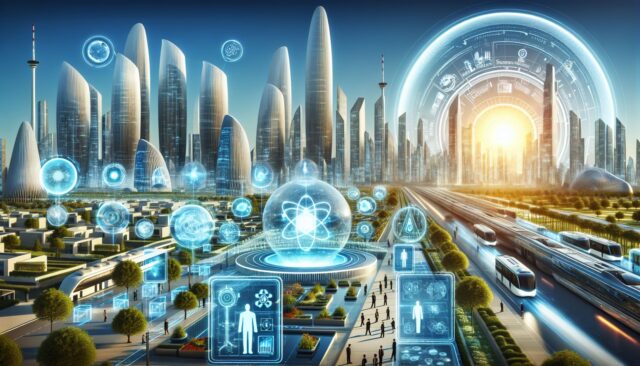
The Promise of Nuclear Fusion: A Tech Utopian’s Dream Within Reach

Hey fellow tech enthusiasts,

Today, I’m diving into one of my all-time favorite futuristic fantasies: nuclear fusion. If you’re like me, you’ve probably spent countless nights imagining a world powered by clean, limitless energy. Well, grab your favorite mug of coffee (or energy drink, no judgment here) and let’s chat about the nuclear fusion revolution that’s edging ever closer to reality.

A Quick Refresher: What Exactly is Nuclear Fusion?

Before we get ahead of ourselves, let’s set the stage for those who might not have the whole fusion picture clear in their minds. Nuclear fusion is the process that powers our sun. By fusing small atomic nuclei like hydrogen into heavier elements like helium, fusion releases a massive amount of energy. Unlike nuclear fission, which splits atoms and powers our current nuclear reactors, fusion doesn’t produce long-lived radioactive waste. It’s basically the holy grail of energy: abundant, clean, and largely risk-free.

Recent Breakthroughs: Light at the End of the Tokamak

In December 2022, the tech world buzzed with excitement when researchers at the National Ignition Facility in California achieved a net energy gain. A fusion reaction that produced more energy than it consumed. This was the kind of breakthrough that fusion fans have been waiting for, taking fusion out of science fiction and planting it firmly in feasible science.

Then there’s ITER, the world’s largest fusion experiment currently under construction in France. Backed by a consortium of 35 nations, ITER is like a sci-fi filmmaker’s dream come to life. They’re using what’s called a tokamak, a doughnut-shaped device that traps super-heated plasma (think: sun-like conditions) using powerful magnetic fields. If you’re into cutting-edge plasma science, there’s no better place to geek out than here.

The Implications: Why Go Gaga Over Fusion?

You might be wondering why the folks in lab coats are so giddy about this. Well, there are a few life-changing reasons:

  1. Limitless Energy Supply: The fuel for fusion reactions is deuterium and tritium. Deuterium can be extracted from seawater, and tritium can be produced from lithium. We’re talking fuels that could last us millions of years. Say goodbye to energy shortages!

  2. Zero Carbon Emissions: Fusion doesn’t emit CO2 or other greenhouse gases. When our climate change charts look like alarm bells, a clean energy source like this feels like nature’s way of throwing us a lifeline.

  3. Safety: No risk of meltdowns, runaway reactions, or radioactive disasters. Fusion reactors shut down safely if anything goes wrong. That’s a level of security that even my clumsiest friends could appreciate.

The Hurdles: Why We’re Not There Quite Yet

As with all grand ideas, the road to fusion energy isn’t without its speed bumps. If I may borrow from the timeless wisdom of every startup founder ever, failure is just a stepping stone to success. Here’s a look at what challenges we need to overcome:

  1. Technological Toughness: Sustaining a high-temperature plasma for extended periods is quite literally walking a tightrope. The materials needed to contain this hot state are still in development.

  2. Economic Viability: Cutting-edge innovation doesn’t come cheap. Current projects require billions in investment, and while venture capitalists and governments are digging deep, the scalability and cost-effectiveness of fusion power need more work.

  3. Regulatory and Environmental Considerations: Introducing a new energy source on a global scale involves navigating a labyrinth of regulations and environmental assessments. It might take years before fusion plants are as common as solar farms.

Looking to the Future: Fusion’s Big Leap Forward

So, where do we go from here? Well, the future might be closer than you think. If ITER and other fusion projects keep up their pace, we’re not far from transitioning from experimental results to actual energy-producing reactors.

Private companies are jumping into the fray as well. Helion Energy, for example, has set ambitious goals to harness fusion by creating more compact and efficient reactors. Energy giants like Chevron are also throwing their weight behind fusion startups, signaling growing confidence in the tech’s potential.

However, let’s remember that scientific breakthroughs don’t work on the timelines of our impatient tech desires. But what’s important is that we’re on that promising path. Every data point, every experiment, brings us a little closer to that techno-utopian vision.

Conclusion: Our Fusion Future

So there you have it. Nuclear fusion feels like the stuff of dreams, but it’s backed by serious science and serious people pushing its boundaries every day. If you’re an optimist like me, this might just give you the hope and excitement you need to fuel your day.

Thanks for sticking around, and keep your eyes on the stars (or the plasma, as it were). Who knows, maybe someday soon, you’ll wake up in a world where the sun’s eternal power is at our fingertips. Until next time, fusion friends!

Riding the AI Art Revolution: Is Creativity About to Get an Upgrade?

Hey tech trailblazers and AI aficionados! Ever sit at a canvas of possibilities, brush in one hand, and pure creativity in the other, only to wish the software could do most of the heavy lifting? Okay, maybe not all of us have. But let me tell you, there’s a revolution brewing in the world of creative arts, and it’s made entirely of zeros and ones. Let’s jump into the fast-paced universe of AI in the creative arts.

The Rise of AI in Art

Artificial Intelligence has always been something of a misunderstood artist, churning out data analyses like poetry and calculations like jazz solos. But lately, our pixelated prodigy is painting quite a different picture.

I remember a time when artists were apprehensive. The fear wasn’t that AI would outdo them, but that it would never understand them, like a grandparent trying to figure out TikTok. Fast forward to today, and AI’s gaining ground faster than my friend who decided to run marathons for fun. Take DALL-E 2 or Midjourney, for instance. These generative models turn text prompts into digital paintings faster than you can say “Bob Ross Bots.”

The Machines Can Paint… and Chill

So what exactly can AI do in the realm of arts? Well, think of it as an extraordinarily ambitious collaborator. It doesn’t tire or complain, and it definitely doesn’t need coffee breaks, unless software updates count. From generating abstract art that’d make Picasso proud to recreating famous works with an AI “twist,” it’s a new world of possibilities.

This shift isn’t just about painting either. We’ve got AI composing symphonies, writing novels, and even designing architecture. The potential applications are as vast as my unfiltered love for tech conferences.

Embracing Collaboration: Artists and Algorithms Unite

There’s good news for those of us who fear robots aren’t quite ready to take over the world (yet). This isn’t an “us versus them” scenario. It’s a glorious opportunity to remix, rework, and reimagine art in ways we’ve only dreamed of before.

Artists Find a New Brush

Experienced artists can now look at AI not as a competitor but as an extension of their paintbrush. No longer is it a struggle for originality, it’s fighting writer’s block with a concrete sledgehammer. Imagine being able to take an original piece of art and push its boundaries with an artificial accomplice, creating something beautifully unprecedented.

And the best part? Artists can spend more time focusing on core creative concepts while leaving the menial or painstaking tasks to their digital collaborators. Consider Adobe’s latest AI-centered tool that helps correct errors in photographs or assists in refining details. It’s a creative process rather than a substitution. Our own human creativity runs parallel to our silicon partners.

The Creative AI Problem

Alright, while it sounds like AI can do anything short of cook dinner, let’s talk about some challenges. AI-generated creativity is not without its critics, and for a good reason. There’s a lot AI can’t understand, namely, humans and our wildly emotional, irrational selves.

Creativity’s Cold Confines

An AI doesn’t know desire, longing, or the inexplicable giddiness when you finally finish a mammoth creative project. Some argue that this emotional detachment makes AI-generated art superficial or, at the very least, highly derivative. The counterargument is that even humans build on previously existing art, but at least we’ve got the emotional context (and a lot of coffee) underlining our versions.

On a more practical note, there are still issues with authenticity, copyright, and ownership when algos get artsy. Is a piece created by AI truly original? Can it be attributed to one coder’s brilliance? These questions tread murky legal waters and make what’s already a creatively complex terrain even slipperier.

Looking Ahead: What’s Next

Here’s where I let my optimism run wild, so hop aboard. This marriage between AI and the arts has only just begun its awkward first date, and I’m convinced the honeymoon period won’t be far behind. With current developments just scratching the surface, think of what could unfold in the next decade.

The Science-Fiction Awaits

Speculate with me for a second. Imagine an AI program that learns art technique as if it were a master and applies it across continents and cultures, continuously evolving like your favorite RPG character. Worldwide collaborations between AI systems and artists could result in the ultimate cultural melting pot, something both beautiful and profound.

Artists might specialize in dream pairing, fusing human vision with AI precision, themselves curators and orchestrators of a kind of ‘collective’ consciousness. You want to see Vincent van Gogh meet Afrofuturism with a splash of 90s grunge? AI might just make it happen.

In closing, AI and creativity isn’t about erasing the human or voiding our contributions. It’s like adding another, rather exciting media to our toolkit, akin to discovering you’ve been drawing with crayons and suddenly getting your hands on a whole box of professional-grade colored pencils.

AI and creativity? It’s a combo to be excited about. And those AI-generated sunsets? They’re pretty amazing, side note.

Thanks for tuning into my little corner of the techno-art world. Until next time, keep skipping through innovation fields, and may your algorithms always find the shortest path to creativity!

Stay curious,
Your Enthusiast Tech Blogger

##Can AI Paint the Future? Exploring the Rise of Artificial Intelligence in Creative Arts

You guys, something amazing is happening right before our eyes. And I’m not just talking about the latest season of that binge-worthy show (although, yes, that’s mind-blowing too). I’m talking about Artificial Intelligence (AI) shaking things up beyond data and numbers. We’re stepping into a world where AI isn’t just the stuff of techies in lab coats—it’s becoming a muse for artists in smocks. Seriously, AI in creative arts is flipping the traditional art world upside down.

A Brush With AI: The New Palette of Creation

Let’s start with how AI is changing the art scene, like a techie Da Vinci of sorts. A few years back, if you told someone that a computer could generate art, poetry, or even music, they’d probably give you a weird look. Fast forward to today, and AI is working alongside artists, bringing to life what was once pure science fiction.

The artistic potential of machines started getting serious attention when projects like DeepArt and OpenAI’s DALL-E began creating computer-generated pieces that could actually compete with human creativity. These aren’t just math geeks doodling in code. These pieces make you feel something real and get your brain spinning. AI gives artists a whole new toolkit to experiment and create, putting fresh inspiration just a click away.

Painting Outside the Lines: The Creative Potential

Now, here’s the good stuff—what can these AI-powered artists actually do? Picture an artist trying to capture that weird dream you can’t quite put into words. AI steps in, ready to pull abstract concepts from dreamland and turn them into real pieces you can see and hear. This isn’t about AI replacing artists (seriously folks, relax), but about having a creative partner that can help turn raw emotion into visual and auditory experiences.

Music & AI Harmony
AI in music is kind of like having Hendrix jam with a robot. AI systems like OpenAI’s MuseNet and Google’s Magenta can compose full symphonies and create genres that’d make even Mozart do a double-take. These AIs digest thousands of songs, figure out their patterns, and pump out melodies that sound anything but robotic. Whether they’re creating full-length masterpieces or providing backing tracks for that garage band next door, AI’s range is honestly impressive.

Theatre & Storytelling
Time for the virtual curtain to rise! AI is also flexing its storytelling muscles with live performances, connecting with audiences in ways that even big-budget directors might be jealous of. Scripts written by both humans and machines create interactive stories that just couldn’t exist in traditional theater. It’s like AI improv, but without the awkward jazz hands.

Scribbles & Scrambles: Human Concerns and Criticisms

Okay, let’s be real for a moment and look at the other side. There are plenty of people worried that AI’s push into creative spaces might create a disconnect, swapping emotional depth for cold calculation. Some critics think AI could cheapen human-made art, arguing that algorithms just don’t have soul or authenticity.

Are these concerns valid? Absolutely. But I think they miss something important: AI isn’t some ghost haunting your easel. It’s more like an assistant who never calls in sick. AI can enhance the creative process instead of replacing the beautiful, messy chaos that is human creativity. The key is seeing it as something that expands possibilities rather than limiting them. Maybe AI will change what it even means to be creative.

The Day Tomorrow: What’s Next for AI Art

So here’s where we pull out our crystal balls (or motherboards) and try to guess what AI might do next in creative arts. As the technology keeps growing and changing, who knows what new approaches might pop up, but I’ve got some ideas.

Making Creativity Available to Everyone
AI could become as easy to use as picking up a crayon. Beyond professional artists, imagine a world where anyone can access high-quality creative tools. We’re talking about a future where someone brand new to music can start creating symphonies or making beautiful visuals with just a little AI help, turning the art world into a space where everyone’s invited.

Cultural Mixing
Just like we’re seeing cultural boundaries get blurred by our connected world, AI in creative arts could really amp up cultural exchanges. With AI, artists from totally different backgrounds can work together and create unique pieces, breaking down barriers and mixing global influences in new ways. It’s like a cultural smoothie with a dash of robot.

Final Brush Strokes: Thinking About This AI Art Moment

So here we are at this wild crossroads between technology and art, an AI art renaissance of sorts. What a time to be alive, right? With all the progress happening every day, it’s pretty clear that AI isn’t some distant sci-fi concept hanging out away from our paints and pens. It’s here, and it’s happening right now. Your next creative collaborator might not be another human, but a fascinating collection of ones and zeroes.

Grab your brushes and keyboards, folks, because AI’s potential in creative arts is turning out to be one hell of a ride. What happens next? We’ll have to wait and see, but this tech-meets-art world is definitely something I want to keep watching.

Journey into the Quantum Realm: The Promise of Quantum Computing

Hey fellow tech enthusiasts! If you, like me, have been geeking out about the wonders and what-ifs of technology, then today we’re diving into something that feels like it was ripped right out of a sci-fi novel—quantum computing. I mean, seriously, how much cooler could it get than manipulating atoms and photons as if they were pieces on a digital chessboard? Strap in, because this is where technology meets the very fabric of reality.

Quantum Computing: More Than Just a Buzzword

Recently, there’s been a lot of chatter about quantum computing, and for good reason. This isn’t just your run-of-the-mill technological advancement; it’s a complete shift in how we think about computing. Classical computers, the ones we’re used to—your laptops, phones, even that Raspberry Pi running in your closet—are based on bits. Bits are binary and fairly straightforward: they exist in one of two states, 0 or 1.

But quantum computers? They operate on a completely different level, literally and figuratively. Quantum bits, or qubits, can exist in multiple states simultaneously thanks to quantum entanglement and superposition. This means they can perform computations at speeds unimaginable with classical systems. We’re talking about solving problems in seconds that would take a classical computer years, maybe even centuries, to crack.

Quantum Supremacy: A Major Milestone

If you’ve been following the news even remotely, you’ve probably heard of Google achieving “quantum supremacy” a while back. In layman’s terms, this means Google’s quantum computer was able to solve a problem that’s effectively unsolvable by any current classical computer. This was a landmark moment, albeit mostly symbolic, showing us what quantum systems might be capable of.

But quantum supremacy is just the beginning. To reach a state where quantum computers can solve real-world problems—like molecular simulations for drug discovery, logistics optimization, or even breaking current cryptographic codes—there’s a lot more work ahead.

The Breakthroughs We’ve All Been Waiting For

Fault Tolerance and Error Correction

One of the biggest roadblocks in the quantum computing race is error rates. Qubits are incredibly delicate—so delicate that merely observing them can lead to errors. This is where fault-tolerant quantum computing comes into play. Imagine trying to work on a super-complex math equation, but every few seconds someone knocks your notepad over. Annoying, right?

Researchers at institutions like MIT and IBM are working on error-correcting codes to ensure these quantum calculations remain intact. Once these systems become robust, we could see fault-tolerant quantum computers that can perform complex calculations without being interrupted by pesky quantum noise.

Quantum Internet: A New Era of Communication

Move over, 5G! The quantum internet promises ultra-secure communication through quantum key distribution and entanglement-based data transfer. It’s secure enough that if someone tries to eavesdrop, the very act of measuring will alter the quantum state, making detection instantaneous. Imagine banking, government communications, and even personal messages being encrypted in a way that’s virtually unbreakable. Einstein himself called it “spooky action at a distance,” and I’d say that’s an apt description.

Quantum Machine Learning

Machine learning has been the darling of the tech industry for years now, but pair it with quantum computing, and we’re onto something truly exciting. Quantum machine learning aims to accelerate the training of AI models and enhance their ability to recognize complex patterns. This could transform fields like pharmaceuticals, astronomy, and financial markets as the added computational power could provide insights never before possible.

Real-World Applications and Future Prospects

Drug Discovery and Healthcare

Picture this: Quantum computers helping us design a vaccine in a matter of days! Drug discovery is an incredibly complex field where a single molecule can take years to develop. Quantum simulations of molecular interactions could drastically reduce both the time and cost involved. Pharmaceutical companies are already exploring partnerships with quantum computing firms, and while we’re not quite there yet, the possibilities look promising.

Climate Modeling and Efficient Energy

As we face the climate crisis head-on, quantum computing could help us develop precise climate models and predictive analytics for sustainable strategies. Plus, in quantum chemistry, finding new catalytic reactions could one day lead to more efficient solar panels and even artificial photosynthesis. Talk about turning potential into reality!

Logistics and Financial Modeling

Transaction speed and path optimization in logistics can see massive improvement with quantum algorithms—imagine shipping routes and supply chains that automatically adapt to conditions in real-time! Financial services can benefit from advanced risk assessment models, allowing for agile responses to market fluctuations.

Challenges and the Path Forward

Of course, I don’t want to paint an overly rosy picture without acknowledging the substantial challenges ahead. Quantum systems are complex, resource-intensive, and currently take up entire rooms with severe cooling requirements. Most importantly, commercial scalability is years away.

Funding and research both need to ramp up to bring these concepts from the theoretical to the tangible. Giants like Google, IBM, and startups like Rigetti and IonQ are racing to tap into this frontier technology’s potential. It’s a thrilling time to be a spectator—or participant—in this particular tech race.

Conclusion: A Quantum Leap Into the Future

While we aren’t quite at the technological utopia where quantum computers solve every problem overnight, quantum computing brings us tantalizingly close to some major breakthroughs. Technologies we’ve only dreamed about are inching closer with every advancement, promising solutions to some of humanity’s greatest challenges.

As people watching this quantum revolution unfold, it’s important we remain both excited and cautious. In the same way the internet changed our world in ways we never imagined, quantum computing has the power to redefine our future.

Until next time, stay curious, keep questioning, and never stop exploring the ever-expanding possibilities that tech offers. Seriously, folks, we’re living through some fascinating times.

What do you think about quantum computing’s potential? Excited, skeptical, or both? Drop a comment below. I’m all ears!