Let me walk you through what’s actually happening here, step by step. The plant-based food scene has moved past the initial hype, and this shift deserves a closer look than most coverage gives it. The reason becomes clear once you know where to look.
The question worth asking is simple: whole food plant-based eating is growing while ultra-processed alternatives plateau. If you’re curious about food science, this reading of the situation turns out to be more accurate once you check what the evidence actually shows.
The Explainer: Setting the Terms
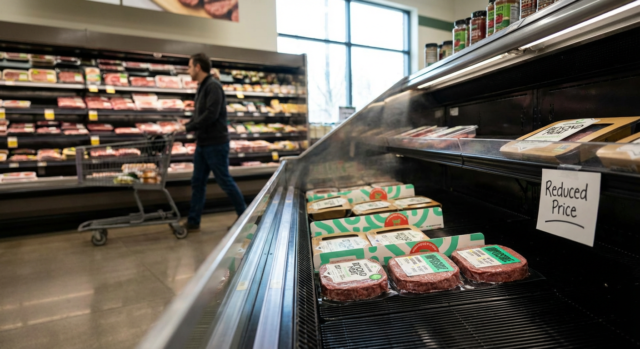
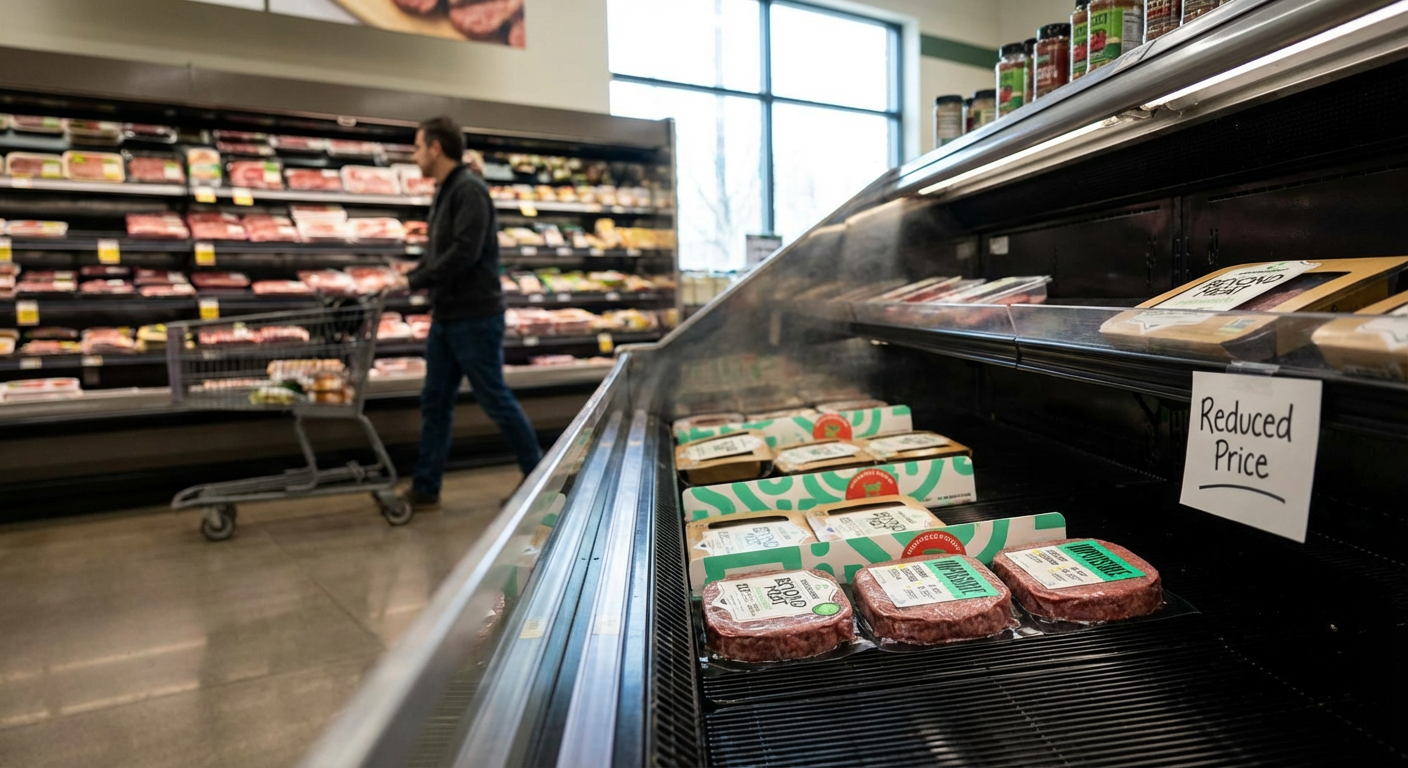
Beyond Meat and Impossible Foods saw their revenue drop after the pandemic peak. This isn’t just another data point, it’s the structural shift that makes everything else in this analysis make sense. These conditions have been building for years, and their convergence makes this moment different from previous ones that looked similar from a distance.
You’re seeing whole food plant-based eating grow while ultra-processed alternatives plateau. Meanwhile, tempeh, jackfruit, and legume-forward menus are replacing meat analogues in fine dining. Look at both trends together and a pattern emerges that Good Food Institute research has been tracking: these conditions are more durable than they first appear, and the implications stretch further than the headlines suggest.
To understand why this matters, compare what was true three years ago with what’s true now. The change isn’t just about numbers. The players, infrastructure, and incentives have all shifted in ways that build on each other rather than cancel out. That compounding effect is what you really need to track.
This moment isn’t worth examining because it’s novel, but because it confirms what’s been building. The underlying forces have been visible for a while. What’s new is that they’ve hit a point where ignoring them takes deliberate effort rather than simple inattention. Crossing that threshold is the real event.
The flexitarian category is now the largest dietary identity in the US at 36 percent. This fits the same picture. These elements aren’t separate, they’re reinforcing conditions in the same structural shift.
The Technique Breakdown: The Analysis
The flexitarian stat is where things get specific. The surface reading is accessible and not wrong, but it misses the mechanism. The mechanism is where the practical insight lives. Here’s what matters: precision fermentation is enabling animal-free dairy proteins at competitive cost, and understanding this changes what you do with the information.
Think about what precision fermentation enabling competitive animal-free dairy proteins actually represents. It’s not a random correlation. It’s a downstream result of structural factors that have been compounding. Previous readings of similar situations failed because they treated symptoms as causes. The structural account makes for boring headlines but better analysis.
The comparison to previous cycles is useful precisely where it breaks down. Similar-looking conditions resolved differently before because the foundation was different. School lunch plant-based programs expanding across California and New York represent a foundation change, the kind that alters how elastic the system is rather than just its current state. Recognizing that distinction separates real analysis from pattern-matching.
The skeptical counterargument deserves honest attention: previous moments with similar surface characteristics didn’t produce the logical-seeming outcomes. That history is real. What’s different now is those school lunch plant-based programs expanding across California and New York. This isn’t a minor variable, it’s the infrastructure condition that previous cycles lacked. Infrastructure changes tend to stick around in ways that sentiment-driven changes don’t. Food Navigator plant-based is tracking this dimension with the rigor it needs.
There’s also a question that often gets skipped in plant-based food coverage: who captures the value from these shifts, and who absorbs the disruption costs? The big picture can be positive while the distribution is uneven in ways that matter enormously to specific participants. Keeping that lens in view is part of reading the situation clearly rather than just optimistically.
Implications: What This Means If You Care About Cooking chemistry
The implications stretch beyond the immediate context. Beyond Meat and Impossible Foods’ revenue decline after the pandemic peak, combined with the structural conditions I’ve described, creates a situation where adjacent fields and communities get affected in ways that aren’t always visible from inside the main story. The second-order effects are often more important than the first-order ones.
Here’s where this perspective parts ways with mainstream coverage: tempeh, jackfruit, and legume-forward menus replacing meat analogues in fine dining is a leading indicator, not a lagging one. The people positioned to respond to what this signals, rather than what it confirms, will be less surprised by what comes next.
Your practical response depends heavily on where you sit relative to these dynamics. For those closest to the core changes, the implications are immediate and operational. For those at greater distance, the implications are strategic: understanding which adjacent pressures are building and which assumed stabilities are more fragile than they appear.
The practical question isn’t whether to engage with these dynamics but how. The answer depends on your context and actual decision timeline. But the first step is the same regardless: accurate understanding of what’s actually happening rather than what the most available narrative claims is happening.
A few concrete observations worth separating from the broader analysis. First: whole food plant-based eating growing while ultra-processed alternatives plateau isn’t temporary, it’s a new baseline. Second: precision fermentation enabling competitive animal-free dairy proteins suggests the adjustment period isn’t over. Third, and most important: organizations and individuals treating the current moment as a new steady state rather than a transition are making a costly categorization error.
The Case Against: What the Critics Get Right
Honest analysis requires engaging the strongest counterarguments, not just the weakest ones. The case against the optimistic reading isn’t trivial. There are real structural vulnerabilities that deserve direct engagement rather than dismissal.
The most serious objection is about sustainability. Tempeh, jackfruit, and legume-forward menus replacing meat analogues in fine dining can be read not as a foundation but as a ceiling. A point beyond which growth becomes self-limiting because of the very dynamics that produced it. If the current state has already absorbed most early-adopting participants, the remaining growth curve may be structurally shallower than recent trajectory suggests.
There’s also the policy and regulatory dimension. Beyond Meat and Impossible Foods’ revenue decline describes conditions in a relatively permissive environment. Regulatory responses to the scale these numbers imply aren’t inevitable, but they’re not implausible either. Organizations planning as though the current regulatory environment is permanent are making an assumption that the history of fast-growing sectors doesn’t support.
The response to these concerns isn’t that they’re wrong, it’s that they’re already partially reflected in the current state of the field. School lunch plant-based programs expanding across California and New York reflect an environment where participants are already adapting to constraints rather than operating without them. The ecosystem’s adjustment capacity is higher than a purely top-down view of the risks suggests.
Looking Forward
The trajectory here is clearer than the pace. Predicting when specific thresholds get crossed is genuinely difficult, and anyone claiming precision about timelines should make you skeptical. But the direction toward continued Beyond Meat and Impossible Foods challenges and continued development of the conditions described above is supported by evidence in ways that don’t depend on a single variable going right.
School lunch plant-based programs expanding across California and New York is the variable to watch as the leading indicator. Historical patterns suggest it moves first, with broader metrics following with some lag. This doesn’t make outcomes certain, but it makes them readable. And readability is what you need for good decisions.
Three questions are worth holding as the story develops. First: are the structural conditions that enabled the current state durable, or cyclical? Second: who’s positioned to benefit from the next phase, and does that differ meaningfully from who benefited in the current phase? Third: what would clean falsification of the optimistic thesis look like, and is there any evidence of that signal emerging? These questions don’t need answers today, but having asked them changes what you notice in the months ahead.
The next step, for most people reading this, is small. The current moment in plant-based food evolution is one where people who have built an accurate model of the underlying dynamics are better positioned than people relying on the surface story. Building that model isn’t quick work, but it’s doable. This analysis is meant as one input into it.
What technique do you want the science behind?