How a Viral Technique Brought Me Back to the Basics
Last December, while scrolling through my phone at midnight like some kind of food-obsessed insomniac, I stumbled onto a video that fundamentally changed how I approach fermentation. A Korean-American content creator was pressing napa cabbage with her palms in a way I’d never quite seen before, and the comments were flooded with people saying their kimchi had transformed overnight. The #KimchiRecipe hashtag alone has accumulated over 2.1 billion views on TikTok, and this smash-ferment technique pioneered by @maangchi2.0 drove a 60% spike in interest just last month. I sat there, watching the same seven-second clip loop three times, thinking: how have I been making kimchi this whole time without knowing this?
What drew me in wasn’t just the novelty of the technique, though. It was something I couldn’t quite articulate until I started researching. This method felt like it was revealing something ancient through a very modern lens. In December 2025, South Korea’s Ministry of Culture officially submitted the kimjang tradition—that communal, generational practice of making kimchi together—for UNESCO Intangible Cultural Heritage renewal. Suddenly, the videos everywhere on social media weren’t just trend-chasing. They were part of a much larger conversation about preserving and honoring a centuries-old practice. I wanted to understand where this smash-ferment approach fit into that bigger story.

The Smash-Ferment Method: Technique Meets Tradition
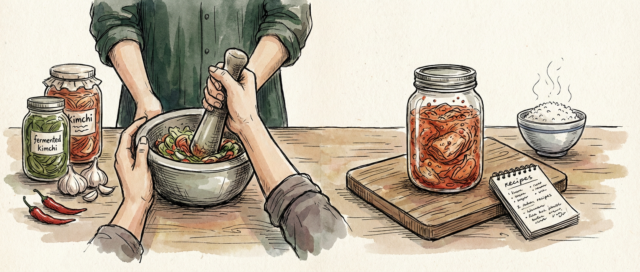
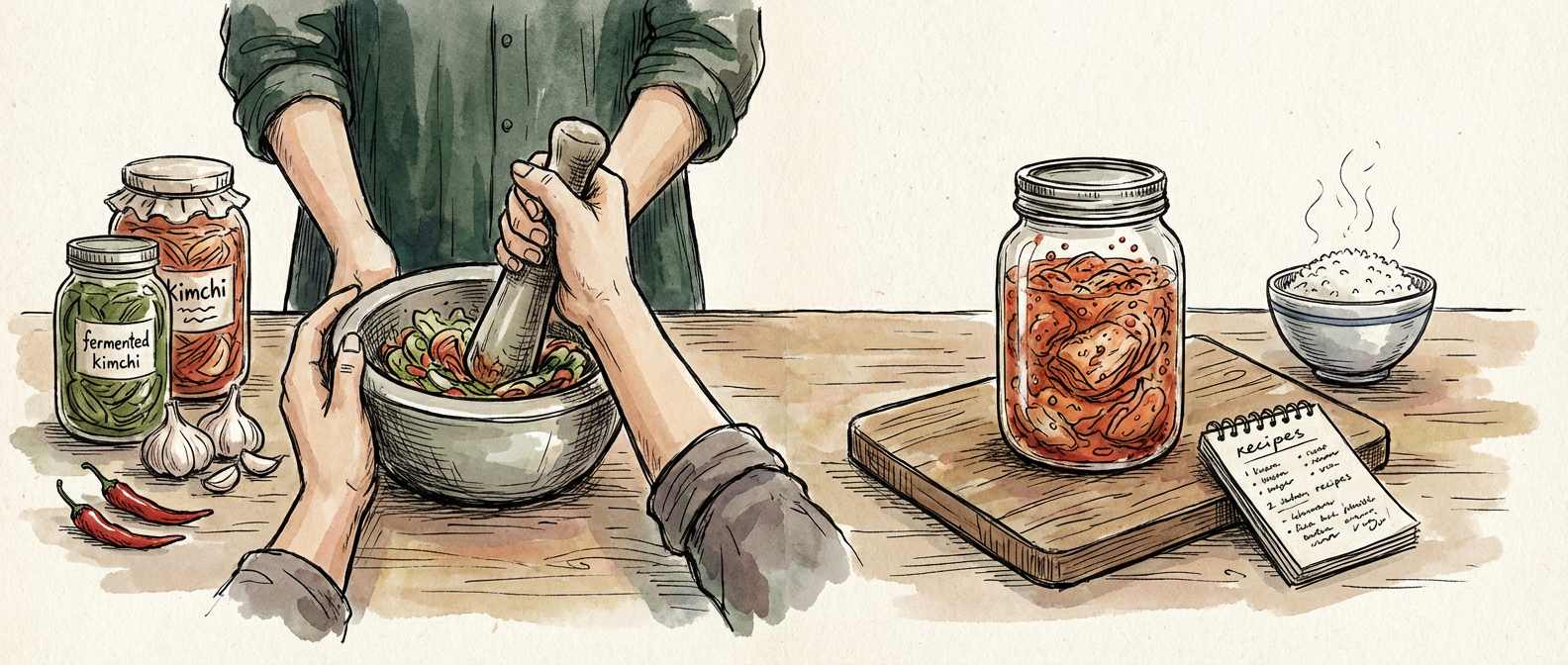
Here’s what makes the technique different from how I’d always done it. Traditional kimchi-making involves massaging salt into each leaf of cabbage, building flavor layer by layer with gochugaru, garlic, ginger, and fish sauce. It’s meditative and deliberate. The smash-ferment method accelerates this by aggressively pressing the cabbage against the bowl with the heel of your hand, breaking down cell walls faster and creating brine almost immediately. The cabbage softens, releases liquid, and begins fermenting in minutes rather than the hour or more it used to take me.
The first time I tried it, I felt like I was being too rough. My hands wanted to go gentle, almost apologetic, the way my mother had taught me years ago. But the creator’s hands moved with confidence and intention, almost violent in their efficiency. So I leaned into it. I pressed down hard, feeling the cabbage collapse under my palms, listening to the wet sound of leaves breaking apart. Within five minutes, my mixing bowl was swimming in brine. The seasoning—gochugaru, minced garlic, ginger, a small anchovy fillet, a touch of sugar—distributed evenly and completely. When I finally packed it into my glass fermentation jar, the cabbage was already beginning its transformation, already exhaling that funky, compelling smell that signals fermentation is truly underway.
What’s particularly interesting about why this technique has gained such traction is timing. US Customs and Border Protection trade data shows that gochugaru pepper imports to the United States increased 34% in 2025, and that spike directly correlates with this trend. Home cooks everywhere are suddenly equipped with the ingredient and the confidence to try something they might have hesitated over before. The technique makes the process approachable without stripping out the authenticity.
The Gut Health Connection That Surprised Me
A few weeks into my fermented batch, I noticed something unexpected happening in my digestion. I’d read about fermented foods and gut health before, mostly in passing. Then I came across research published in the Cell Host & Microbe Fermented Foods Microbiome Study, which found that two servings of fermented vegetables daily for 10 weeks increased microbiome diversity markers by an average of 19% in participants. I wasn’t conducting a controlled study on myself, but I started eating my homemade kimchi more deliberately, working it into nearly every meal.
By week three, I noticed my energy levels had stabilized in a way they hadn’t in months. My digestion felt easier. I’m hesitant to make grand claims about health benefits because my experience is just one person’s story, but the science behind it feels increasingly solid. Fermentation creates beneficial bacteria and enzymes that our bodies seem to recognize and welcome. When you’re eating food your great-grandmother’s great-grandmother might have eaten, made through methods refined over centuries, there’s a resonance there that goes beyond nutrition labels.
How This Ancient Practice Became Modern Food Culture
What strikes me most about the moment we’re living in is how Korean home cooking has moved from niche interest to mainstream conversation. The James Beard Foundation named Korean pantry cooking as its official Emerging Cuisine Trend for 2026, citing it in their annual America’s Classics report. This isn’t a passing fad anymore. Culinary validation and cultural recognition are happening at the same time, which is actually quite rare.
The smash-ferment technique is interesting precisely because it doesn’t represent a departure from tradition—it’s an acceleration of it. Korean home cooks have always used similar hand pressure techniques; they’ve always worked with urgency and efficiency. What’s new is young creators documenting these methods for global audiences, which has somehow made Korean food feel both more accessible and more precious. The viral moment becomes a gateway to understanding something that once required apprenticeship and years of practice. Now anyone with cabbage, salt, and determination can get started.
When I think about what this trend really represents, it connects back to that UNESCO recognition of kimjang. We’re living in a moment where food traditions aren’t being lost to globalization—they’re being preserved through it, sometimes even rescued by it. Every person who makes their first batch of kimchi using the smash-ferment method is participating in something that stretches back generations, while also making it their own in whatever kitchen they have.
Making It Your Own (While Honoring Where It Comes From)
Three months into my smash-ferment practice, I’ve made five different batches. Some I flavored with extra ginger. One I spiced with just a whisper of sugar. Another I cooked down into kimchi jjigae, a stew with tofu and broth. Each batch teaches me something new about how to listen to my ingredients and trust the process. The technique has become almost meditative now, that urgent pressing settled into something more like rhythmic engagement.
If you’re thinking about trying this method yourself, start with the basics. Get good gochugaru—that Korean red chili pepper powder that seems to have become much easier to find in the past year. Use fresh garlic and ginger because they actually matter here. Find a glass jar you like looking at because you’ll be living with it for weeks. Press your cabbage like you mean it. Let the brine gather. Then wait, which is honestly the hardest part of any fermentation. Trust that the microbes know their job. Trust that this is how food has always become more itself.
What I’d love to know is: have you tried any fermented vegetable recipes lately? Are you experimenting with techniques you’ve discovered online, or do you come from a family tradition of fermentation? The conversation around Korean food feels genuinely open right now in a way it hasn’t before, and I think that generosity of sharing is worth celebrating.