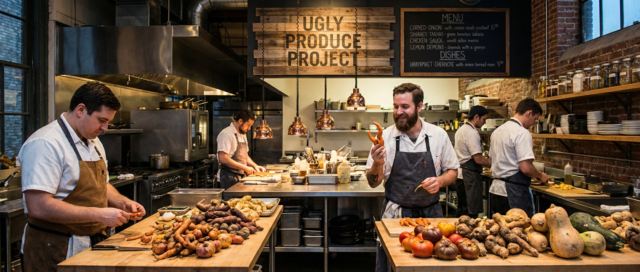
The Hidden Crisis in Your Produce Aisle
You know that moment when you’re standing in the grocery store, scanning tomatoes, and you pick up one with a slight dimple or an asymmetrical shape, then put it back? That instinct has cost American farms nearly $18.2 billion in losses alone. Between thirty and forty percent of the entire United States food supply never makes it to a table, with imperfect produce bearing much of the blame. The numbers are staggering, but what fascinates me more is what happens on the farm itself, where perfectly delicious carrots get rejected for having a bend, where potatoes don’t make the cut because of their irregular size, where entire harvests of beautiful squash get plowed back into the earth because they don’t fit a retailer’s aesthetic requirements.
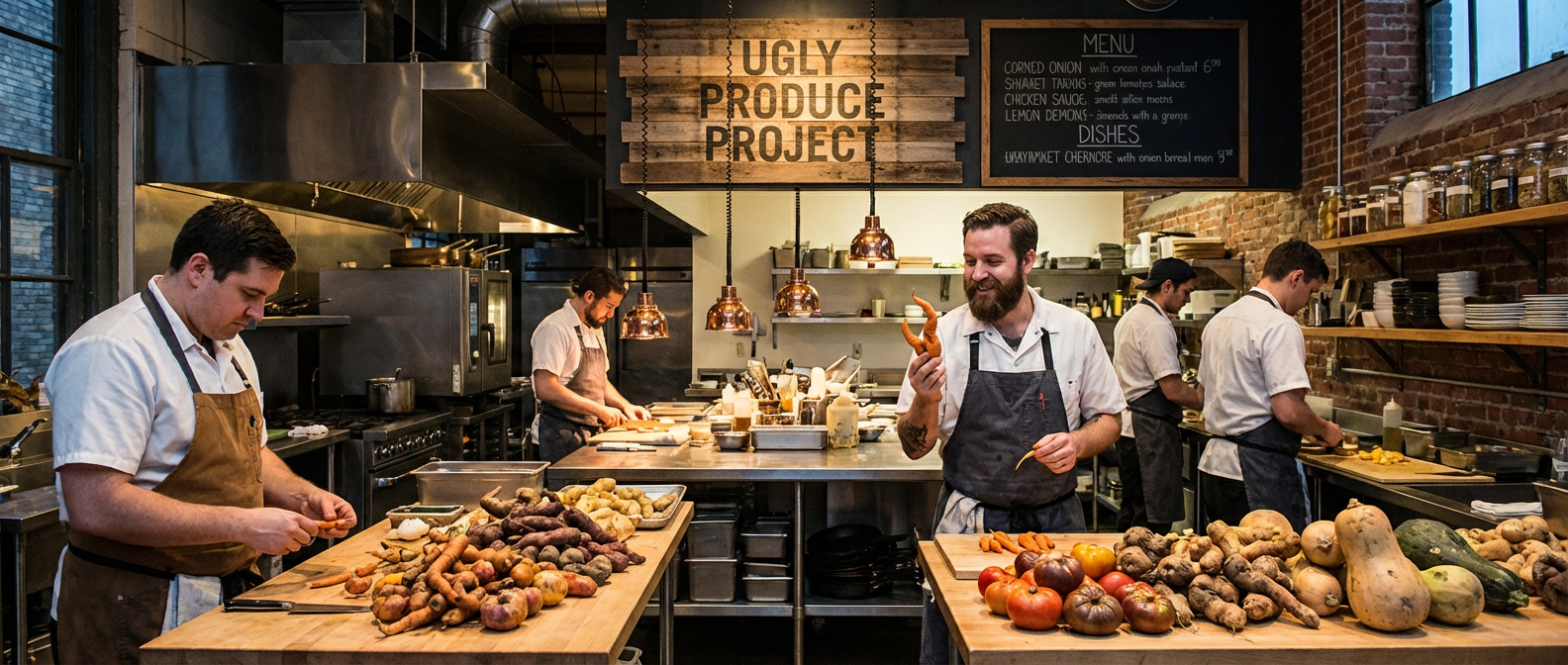
This waste isn’t accidental. It’s systemic. Supermarkets have trained us to expect uniformity, and farmers have spent decades breeding and selecting crops to deliver exactly that. But here’s what I’ve learned from talking with chefs who work with rescued produce: the most flavorful vegetables are often the ones that look a little strange. A gnarled heirloom tomato has survived the season, accumulated sugars, developed complexity. An asymmetrical carrot has pushed through rocky soil and concentrated its sweetness as a survival mechanism. The food science is simple and elegant: appearance and taste are almost entirely unrelated.
When Chefs Started Paying Attention
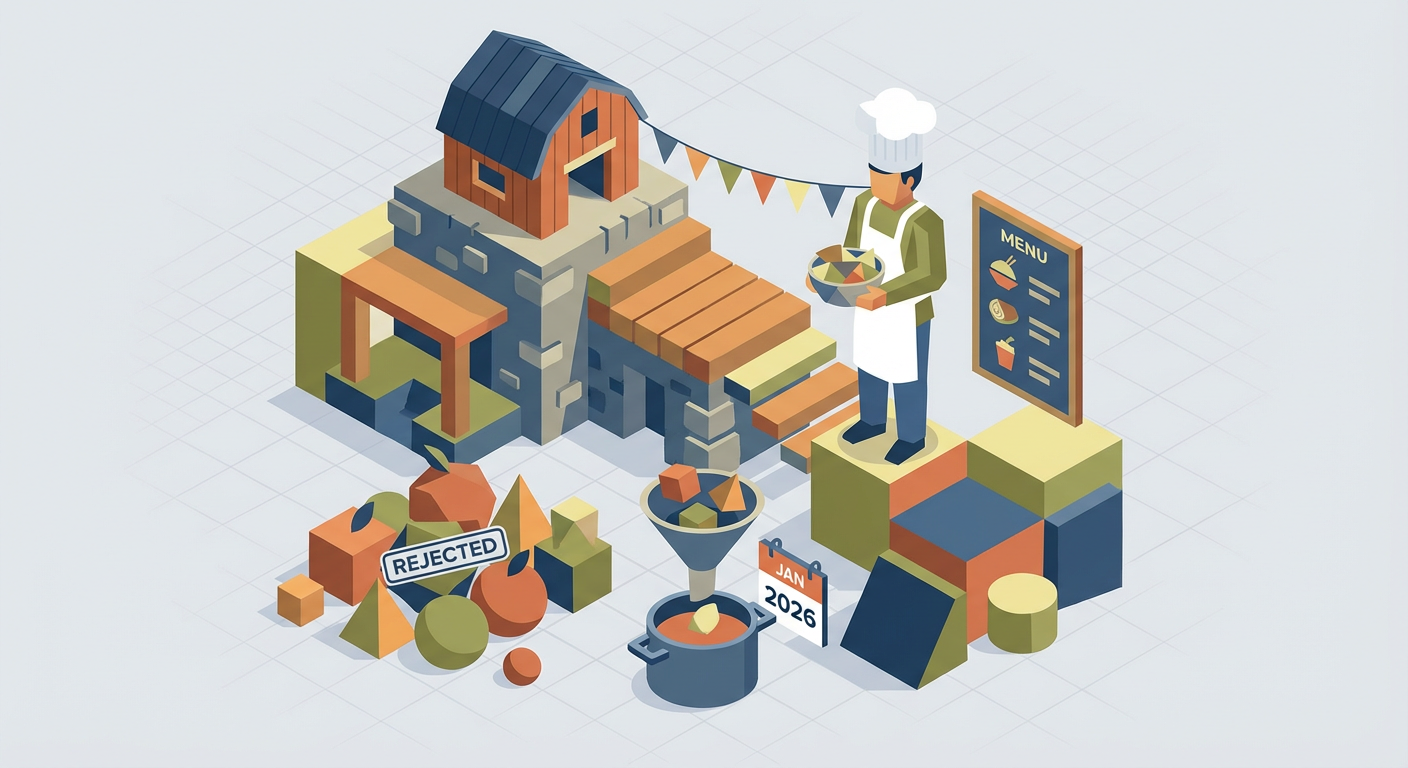
Chef Dan Barber didn’t invent the waste-forward movement, but he made it impossible to ignore. His WastED pop-up, which returned to Blue Hill at Stone Barns in January of this year, sources one hundred percent of its menu from agricultural surplus that the USDA rejected. Every dish is built backward from what farmers couldn’t sell. This isn’t performance art or charity work. It’s serious cooking that takes a constraint and finds the creative possibility within it. When you only have access to misshapen beets, a peculiar-looking squash, and some supposedly substandard greens, you start asking different questions in the kitchen. How can I apply heat to emphasize sweetness? What technique transforms this texture? Which flavors will sing together?
Barber’s approach has sparked something much larger. Restaurants across the country are recognizing that seventy-two percent of diners now actively prefer establishments that feature rescued produce prominently on their menus. This isn’t fringe positioning anymore. It’s becoming the expectation. And the chefs leading this movement aren’t doing it out of guilt or marketing calculation. They’re genuinely excited about working with ingredients that have stories, that come with natural constraints, that demand more skill and attention than a perfect specimen ever could.
The Technology Making It Possible
What makes this movement scalable is infrastructure. Three point four million active subscribers now use Imperfect Pantry Rescued Produce Delivery, following a recent merger that consolidated the space. That twenty-two percent year-over-year growth in subscriber numbers tells you something important: consumers are ready. They want this option. They’ll adjust their expectations about what a carrot should look like if it means participating in something meaningful. The technology required is straightforward but crucial. A robust supply chain that aggregates rejected produce from multiple farms and distributes it to chefs, restaurants, and home cooks means farmers don’t have to destroy their harvest, and kitchens gain access to ingredients at a fraction of conventional prices.
From a food science perspective, this redistribution creates interesting challenges and opportunities. Imperfect produce often arrives with a shortened shelf life because it includes items at various stages of ripeness that conventional sorting would have separated. This means chefs and home cooks have to become more intentional about timing. You can’t buy these vegetables and let them sit for two weeks. You have to plan your meals around their readiness. But this friction actually deepens engagement with cooking. You become more attuned to the transformation happening in your vegetables. You learn to read ripeness, to understand what a peach is ready to do, to recognize when a bunch of greens has reached its moment. It’s the opposite of convenience, and somehow it’s becoming more desirable.
How Europe Forced American Innovation
The European Union’s binding food waste reduction targets took effect in 2025, requiring all member state restaurants to reduce food waste by thirty percent by 2027. This regulation created a forcing function. Chefs in Paris, Copenhagen, Berlin, and Barcelona suddenly had a legal mandate to rethink their supply chains, their menus, their kitchen practices. What emerged were techniques that are now influencing American chefs. European restaurants started featuring imperfect produce not as an afterthought but as the centerpiece of tasting menus. They developed preservation methods to extend the usability of rescued vegetables. They created stocks and ferments from parts that would normally be discarded. The regulatory pressure generated culinary creativity.
American chefs are watching and adapting. Without the EU’s legal mandate, they’re choosing to implement similar practices because they see the approach working and because their customers demand it. This bottom-up adoption is actually more powerful than regulatory requirement because it’s driven by genuine conviction rather than compliance. Chefs are becoming advocates, teaching customers and other restaurants what’s possible when you prioritize flavor and sustainability over appearance.
What This Means for How You Cook
The ugly vegetable movement isn’t just something happening in restaurants. According to USDA Food Loss and Waste Data 2025, the conversation about produce rejection has reached mainstream awareness. Home cooks are starting to recognize that the vegetables we’ve been conditioned to reject are often more interesting to work with. That apple with the lopsided shape might be more flavorful. That squash with the odd bumps might roast into something extraordinary. When you start cooking with intention rather than convenience, when you begin understanding the relationship between appearance and flavor, your entire approach to the kitchen shifts.
I’ve noticed this change in myself over the past year. I get genuinely excited now when I receive a delivery of rescued produce with all its imperfections. I start planning meals around what’s in front of me rather than forcing ingredients into predetermined recipes. I taste more carefully, noticing how that slightly overripe peach has concentrated its sweetness, how that gnarled root vegetable has developed complexity. This is what the chefs leading the ugly vegetable movement are teaching us: that limitations breed creativity, that imperfection often hides excellence, that slowing down and paying attention transforms cooking from a task into genuine engagement with where our food comes from.
If you’re curious about exploring this yourself, I’d love to hear what you discover. Have you cooked with rescued or imperfect produce? What surprised you about how it tasted or behaved in the kitchen? The movement only grows when more of us start asking these questions and sharing what we learn.