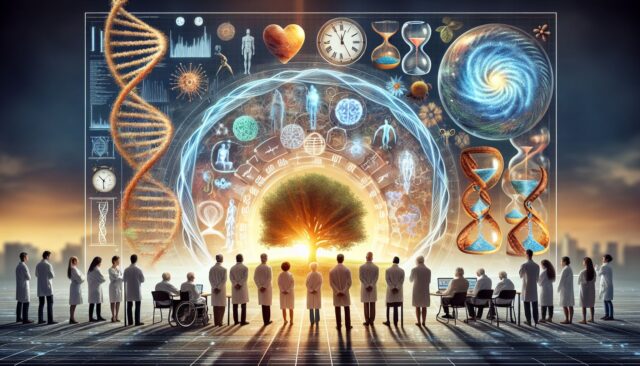
Hey tech aficionados! Today, I want to explore the fountain of youth, the digital and scientific kind. We’re talking about the latest breakthroughs in longevity, where science meets a sprinkle of magic—or at least that’s what it feels like sometimes. This is a topic I’ve been snooping around for years now, and it seems like every day we’re one step closer to ensuring we can live longer, healthier lives. So, grab your galactic snack bars, and let’s talk longevity!
The Science of Anti-Aging
There’s this incredible collaboration happening right now between biotechnologists and data scientists. They’re not just saying, “Hey, let’s make people live longer,” but they’re digging into the nitty gritty details of cellular biology. Think of it as decoding ancient hieroglyphs but in our DNA.
One of the most exciting breakthroughs comes from the discovery of senolytics. Fancy word, but it refers to a class of drugs designed to clear out old, dying cells that bog down healthy tissue. Removing these ‘zombie cells’ can improve organ function and, potentially, increase lifespan. It’s like decluttering your hard drive for peak performance.
There’s also a fascinating movement around NAD+ (Nicotinamide Adenine Dinucleotide) boosters. NAD+ fuels energy production in cells, and its levels drop as we age. Scientists are exploring supplementation of precursors like NMN or NR to boost cellular functions, similar to how caffeine jolts my neurons every morning. If this works out, it could be game-changing for extending healthspan—that’s lifespan in the pink of health, folks.
Personal Reflections
When I first read about senolytics, I had this epiphany. The same way my laptop needs a software purge now and then, my body does too. And the wild part? It’s not sci-fi anymore. It’s happening right now. I often think, usually to the bewilderment of my non-techie friends, that someday taking these age-defying pills could be as common as popping a multivitamin.
The Role of Artificial Intelligence
Now, combine that biological exploration with a dose of Artificial Intelligence (AI), and things start getting spicy. Yes, AI isn’t just for defeating world chess champions or generating meme-worthy art. It’s also reshaping our understanding of human health and aging.
Through machine learning algorithms, scientists are analyzing gigantic datasets to predict how small genetic changes might impact aging. These AI models can simulate thousands of scenarios and predict outcomes far quicker and more efficiently than traditional lab settings. I mean, who wouldn’t want an AI-assisted aging scientist in their back pocket?
The Exciting Dance of Collaboration
On a recent trip to a conference—it could’ve just been my couch during a Zoom conference, but stay with me—I saw incredible collaborations happening. Companies like Google’s Calico and Microsoft’s partnership with the biotech sector are investing big bucks into this domain. The blend of tech and biomedicine isn’t just a trend. It’s a beautiful dance with potentially life-changing consequences.
Challenges and Ethical Considerations
Now, before we get too carried away imagining a cyberpunk future where grandpa’s bedtime stories include pro-tips on drone-swerving, there are hurdles we need to work through.
First, there’s the cost barrier. Cellular rejuvenation therapies aren’t exactly coming out of candy machines. For this tech to truly change the game, it needs to be accessible—which means confronting economic inequalities that could lead to radical discrepancies in who gets to live a longer, healthier life.
Then there’s the ethical puzzle. Enhancing lifespan raises questions about overpopulation, resource allocation, and perhaps even our planet’s carrying capacity. Not to mention the existential question: If we can live forever, do we want to?
The Future Outlook
What excites me the most is that so many people from diverse fields are combining their expertise to crack the code of aging. Scaling these technologies from experimental to everyday use remains a massive task, but the community’s energy is contagious.
In speculative whispers, there’s talk about integrating tech to customize health improvement plans. AI doctors we could consult via holograms in our living rooms? Maybe a fridge that runs diagnostics based on our choices and tosses unhealthy snacks out (as much as that sounds like losing a battle with your fridge).
Sure, we might be a few decades away from fully realizing these dreams, but each innovation makes it feel tantalizingly close.
Wrapping It Up
In this whirlwind of a blog post, I just touched the tip of the iceberg of what’s happening in longevity tech. It’s a blend of science, futurism, and a pinch of magic that can’t help but captivate the daydreamers among us, myself included. The potential for impact is massive, feeding both hope and endless curiosity.
Next time I kick back with some futuristic beverage—coffee with a pinch of NMN, anyone?—I’ll be thinking about what else is coming down the tech pipe. Here’s to living longer and, more importantly, living well. Stay curious, don’t age!