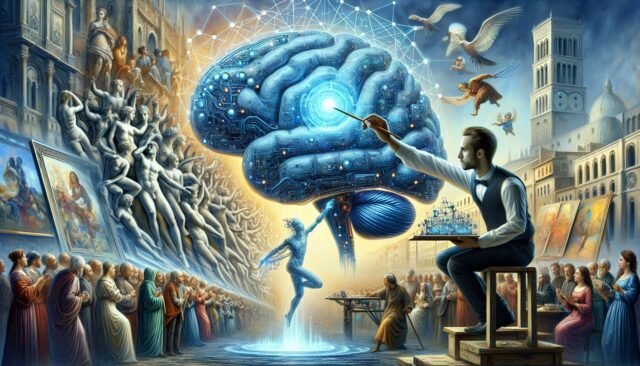
Welcome back, my tech-loving amigos! Today, we’re diving into a subject that’s been sparking excitement and a little bit of controversy too—Artificial Intelligence in the creative arts. Now, I know what you might be thinking. How can machines, those logic-churning, algorithm-spinning marvels, possibly contribute to the chaos-fueled wonders of art? But let me tell you, AI is not just humming tunes or framing funky coloring. It’s more like introducing a disruptively cool rock band to the genteel classical symphony of creativity. Grab your favorite cup of coffee (or tea, if that’s your jam), and let’s get into this!
Meet the Brush: AI’s First Strokes on the Canvas
Not so long ago, I stumbled upon an AI-generated painting in a local art gallery. I swear it was like looking at a Monet through a kaleidoscope! This wasn’t just your run-of-the-mill landscape, and no, it wasn’t reminiscent of a three-year-old’s attempt with finger paints. It was colorful and distinctively fresh, like a visual espresso shot. This encounter got me curious, so I went headfirst into how AI is reshaping art, just like humans have always feared—err, embraced.
AI models like DALL-E and Midjourney are creating wild works at the intersection of technology and artistry. These platforms turn simple prompts into complex images, challenging our conventional perceptions of art. Just like penicillin was discovered by accident, it feels like we’re witnessing the birth of a new aesthetic era.
AI Musicians: The Sound of Tomorrow
Listening to AI-composed music for the first time was a bit like being Rick-rolled in a VR world—it was oddly thrilling! Now, we’ve got clever algorithms composing scores that are symphonic and layered. They’ve moved beyond mere ambient soundscapes, edging into realms dominated by human composers for centuries.
AI models like Jukedeck and AIVA are spearheading this revolution. They’re able to identify musical patterns and compositions, much like a sommelier identifying notes in a glass of wine (or like me pretending to be one at the local tasting event). These AI artists are offering soundtracks for video games, films, and maybe even your life if we project far enough into the future!
The Writers’ Guild AI-Style: Penning the Future
Guess what? Robots got a taste of Shakespeare. GPT-3 and its brethren are stepping into the storytellers’ shoes, creating tales with the finesse of an experienced wordsmith. Now, I must admit, it felt somewhat surreal encountering AI-penned poetry—akin to having coffee with an existentialist toaster.
AI isn’t here to rewrite “War and Peace,” but it is helping craft short stories, narrative plots, and even collaborative novels! Believers in the beauty of words, don’t panic. AI’s role here is symbiotic, often collaborating with authors to enrich prose and enhance creativity. Think of it as the amusing sidekick in a buddy cop movie, with GPT-3 as the witty partner.
An Artist’s Nightmare or Dream?
We often hear the cries of artists who fear a Skynet scenario in our creative arenas. (“Hasta la vista, creativity!”—nah, not likely.) However, AI is more about augmentation than replacement. It’s like adding paprika to your homemade chili; it kicks things up a notch without changing the hearty recipe.
Artists are developing new partnerships with AI, creating works that are unparalleled and previously unthinkable. From generating instant movie storyboards to crafting immersive virtual environments, the fusion of human intuition with AI’s computational power is mind-blowing.
Challenges: Navigating the Ethical Canvas
I’d be remiss to ignore the ethical elephant painting in the room. The problems AI art presents are numerous. Plagiarism, copyright, and ownership—oh my! These issues wind through the intellectual property landscape like a drunken artist on a late night stroll.
Who owns a piece created by an AI? Does the innovation come from the coder, the user, or the machine itself? These questions are currently ping-ponging through courts and panels. Fortunately, the debate invites dialogue rather than a dystopian disaster. Let’s hope the spirit of collaboration trumps chaos here.
The Future Palette: Why the Arts Should Embrace AI
As with any budding romance, support plays a key role in AI’s courtship with the arts. There’s a huge landscape of potential here, folks. Picture AI holding your paintbrush as you explore deeper portions of creativity or creating plots for ever-evolving transmedia experiences.
A collaborative future where AI and artists work together could position creativity as the new frontier. We could witness smarter, faster, and more profound artistic endeavors that blend human emotion with computing intelligence.
Final Brushstrokes
So, what’s the takeaway here, fellow tech voyagers? AI in creative arts is an exhilarating ride, mixing hard data with evocative form. Think of it like AI’s coming-of-age film, where creativity is taking the worthy goosebumps-giving lead.
Should we brace for AI to hijack human creativity? Heck no. The machines are just holding a torch while we humans navigate this expanding domain. It’s thrilling, unnerving, and ultimately inspirational. So keep your eyes peeled and creative energies flowing; we’re witnessing a revolution unfold, one brushstroke, beat, and word at a time. And who knows, maybe your next favorite symphony—or a misadventure with existentialist toasters—will be born from this union. Stay creative, folks!